
Now that David Headley has pleaded guilty, it is settled that he will not be extradited to India and that India will not be allowed to interrogate him.
How this individual who had been alerted to the authorities, the US Embassy, about his perhaps Islamic leaning to some radicalization, was still able to have a visa, that visa not revoked and able to get on a US aircraft," Homeland Security Secretary Janet Napolitano was asked by a reporter.

Noted laywer Ujjwal Nikam had asked the court that Headley should be tried along with Abu Jundal.

'As Rana is not an Indian citizen, our leverage on the US system -- whether it's their judiciary or the executive -- is very limited in that sense.'

Tahawwur Hussain Rana, the key mastermind of the 2008 Mumbai terror attacks, is being interrogated for eight to ten hours daily by the National Investigation Agency (NIA) to unravel a larger conspiracy behind the strikes. Rana, who was extradited from the US, is being grilled by NIA investigators to probe a larger conspiracy behind the attacks, in which 166 people were killed and over 238 injured. He is being allowed to meet his lawyer and is being provided with basic necessities. The investigators hope to find some important leads on his travels in parts of northern and southern India days before the carnage in Mumbai on November 26, 2008.

The American-Pakistani terrorist's deposition will resume on Thursday.

In a long battle, this is Rana's last legal chance not to be extradited to India.

Tahawwur Hussain Rana, a Pakistan-born Canadian national and close associate of David Coleman Headley, could be extradited to India in connection with the 26/11 Mumbai terror attacks. Rana's travel history in parts of north and south India before the attacks in 2008 is expected to provide crucial leads for the investigation. His extradition would mark the third person to be tried in India for the attacks, after Ajmal Kasab and Zabiuddin Ansari alias Abu Jundal.

Sri Lanka's response to the Easter attacks has been slow and politically contested, unlike India's swift institutional reforms after the 2008 Mumbai terror attacks, observes Colonel R Hariharan (retd).

The 64-year-old Pakistani-origin Canadian businessman would also be questioned on his suspected links with the officials of Pakistan spy agency Inter-Services Intelligence (ISI) and his association with terror group Lashkar-e-Taiba (LeT), which had orchestrated the attacks.

Here are the revelations made by Headley so far in the deposition
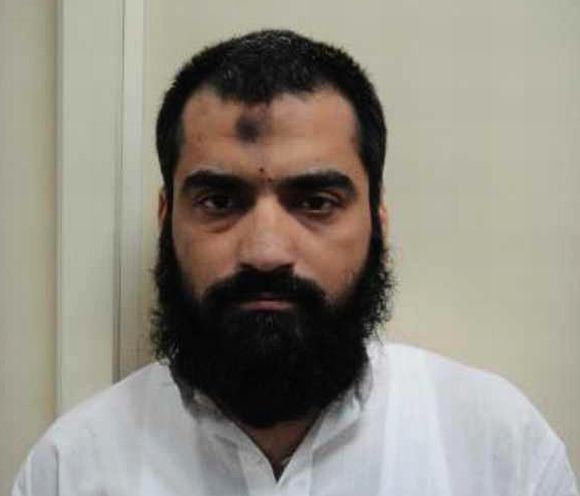
Key 26/11 plotter Sayed Zabiuddin Ansari alias Abu Jundal's lawyer on Monday informed a Mumbai court that he wanted to cross-examine Pakistani-American terrorist David Coleman Headley for four days.
A court in New Delhi has sent Tahawwur Hussain Rana, the mastermind behind the 2008 Mumbai terror attacks, to 18 days of National Investigation Agency (NIA) custody. The court cited the need for sustained interrogation to uncover the extent of the conspiracy and the involvement of multiple targets across India, including New Delhi. Rana, a Pakistani-origin Canadian businessman and close associate of 26/11 conspirator David Coleman Headley, was extradited to India after the US Supreme Court dismissed his review plea against his extradition.
This was Rana's last legal chance not to be extradited to India. Earlier, he lost a legal battle in several federal courts, including the US Court of Appeals for the North Circuit in San Francisco.
Chilling confessions of Lashkar-e-Tayiba operative David Coleman during his 30-hour interrogation with the National Investigation Agency last year reveal that the 26/11 attack is not the worse the nation has experienced. In fact, the terror strike that massacred Mumbai has only inspired the terror group to continue waging "war" against India.

In a further blow to the encounter case of Ishrat Jahan, the National Investigation Agency has clarified that convicted terrorist David Coleman Headley, who is currently lodged in an American jail, never mentioned the 19-year-old during any of the interrogations.

A Delhi court on Monday issued fresh non-bailable warrants against Pakistani-American David Coleman Headley, his accomplice Tahawwur Rana, Lashkar-e-Tayiba founder Hafiz Saeed and 26/11 attack mastermind Zaki-ur-Rehman Lakhvi, who are accused of carrying out terror attacks in New Delhi.

A total of nine terror sites in Pakistan, including five in Pojk, linked to Lashkar-e-Taiba (Let) and Jaish-e-Mohammed (Jem), were targeted with meticulous planning to avoid civilian casualties.

The Mumbai police on Monday submitted a chargesheet before a special court in Mumbai against Pakistani-origin Canadian businessman Tahawwur Rana for his involvement in the November 2008 terror attacks in the metropolis.

The deposition was meant to secure more information and revelations on the 26/11 terror attacks that would make India's case against Pakistan stronger. Instead, the internal conflicts within India's security establishment stood exposed.

Pakistani-American terrorist David Coleman Headley on Tuesday continued his deposition for the second consecutive day before a court in Mumbai.
A Delhi court has issued fresh non-bailable warrants against Pakistani-American David Coleman Headley, his accomplice Tahawwur Rana, lashkar-e-Tayiba founder Hafiz Saeed and 26/11 attack mastermind Zaki-ur-Rehman Lakhvi, who are accused of carrying out several terror attacks in India.
Tahawwur Hussain Rana, the mastermind behind the 2008 Mumbai terror attacks, has been taken into 18-day custody by the National Investigation Agency (NIA) in India. Rana was extradited from the United States after years of legal battles and will be questioned to unravel the complete conspiracy behind the attacks.
Tahawwur Hussain Rana, a Canadian national accused of involvement in the 2008 Mumbai terror attacks, has been extradited to India from the United States. Rana's interrogation is expected to shed light on the role of Pakistani state actors in the attacks, which claimed 166 lives. Indian authorities are particularly interested in his travels across India in the days leading up to the attacks, including visits to Hapur, Agra, Delhi, Kochi, Ahmedabad, and Mumbai. Rana's extradition follows a lengthy legal battle, with the US Supreme Court ultimately denying his application to challenge it. Rana is known to be associated with Pakistani-American terrorist David Coleman Headley, one of the main conspirators of the 26/11 attacks. The investigation into the Mumbai attacks has implicated senior members of terror outfits Lashkar-e-Taiba (LeT) and Harkat-ul Jihadi Islami (HuJI), as well as officials from Pakistan's Inter-Services Intelligence (ISI).
'His deposition shows that the dividing line between Pakistan's State and non-State actors had completely blurred in Mumbai's 26/11 terror strikes.'
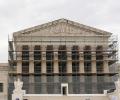
The US Supreme Court has denied the application of Tahawwur Rana, a Canadian national of Pakistani origin accused in the 2008 Mumbai terror attacks, seeking a stay on his extradition to India. Rana, currently detained in Los Angeles, had submitted the application after Associate Justice Elena Kagan initially denied it. Despite a renewed appeal, the Supreme Court ultimately rejected the request.
The National Investigation Agency (NIA) has begun questioning Tahawwur Hussain Rana, the mastermind behind the 2008 Mumbai terror attacks, to uncover the larger conspiracy behind the deadly strikes. Rana, who was extradited from the US, is being held at the NIA headquarters in New Delhi. The interrogation is focused on his possible connection with the Lashkar-e-Taiba (LeT) and his suspected links with the Pakistani spy agency Inter-Services Intelligence (ISI).
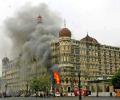
Tahawwur Rana, accused of involvement in the 2008 Mumbai terror attacks, is expected to be extradited to India from the United States soon. The US Supreme Court denied his last-ditch effort to stop his extradition, moving him closer to being handed over to Indian authorities. Rana's extradition is expected to help probe agencies expose the role of Pakistani state actors behind the attacks and shed new light on the investigation. He is associated with Pakistani-American terrorist David Coleman Headley, one of the main conspirators of the 26/11 attacks.

The United States has extradited Pakistani-Canadian Tahawwur Hussain Rana to India to face charges for his alleged involvement in the 2008 Mumbai terrorist attacks. Rana, 64, was convicted in the US in 2011 for providing material support to Lashkar-e-Taiba, the Pakistani militant group responsible for the Mumbai attacks. The US Department of State said it has long supported India's efforts to bring those responsible for the attacks to justice and that the extradition is a critical step towards seeking justice for the victims. Rana's extradition comes after the US Supreme Court denied his last-ditch attempt to evade extradition. He will now face justice in India for his role in the attacks which killed 166 people, including six Americans.

Devika Rotawan, a survivor of the 26/11 Mumbai terror attacks, has demanded the death penalty for Tahawwur Hussain Rana, a key accused extradited from the US. Rotawan, a key witness in the case, identified terrorist Mohammed Ajmal Kasab in court during the trial. She believes the extradition is a "big win" for India and called for further action against other conspirators in Pakistan.

Former Home Minister P Chidambaram said the government of India would not file formal charges against Pakistani-American terrorist David Headley until Ajmal Kasab's trial was over. Vicky Nanjappa reports

'Pakistan may have moved back from this devilish plot in 2007, but there is no guarantee it won't be on the drawing boards again,' warns Rajeev Sharma.

akistani-American David Coleman Headley outline how the Lashkar-e-Tayiba and the Inter-Services Intelligence wanted to spread terror in India.
Tahawwur Hussain Rana, a Pakistan-born Canadian national and close associate of David Coleman Headley, is set to be extradited to India from the US. Rana was involved in the planning and execution of the 2008 Mumbai terror attacks, which killed 166 people, including six Americans. He assisted Headley in obtaining a visa for India, established a front company in Mumbai, and helped in reconnaissance of targets in Mumbai and New Delhi. Rana was convicted in the US for providing material support to Lashkar-e-Taiba (LeT) and sentenced to 14 years in prison. His extradition to India will allow authorities to question him about his involvement in the Mumbai attacks and potentially uncover new information about the role of Pakistani state actors.
The hugely significant development comes just days after Rana's last-resort attempt to evade extradition to India failed after the US Supreme Court justices denied his application, moving him closer to being handed over to Indian authorities to face justice in the dastardly attacks.

Magistrate judge Jacqueline Chooljian on Thursday ordered the defence attorneys and prosecutors to file additional documents by July 15, which was reported by a US news agency.
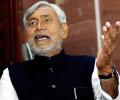
Bihar CM Nitish Kumar denied describing Ishrat Jahan, who was killed in an encounter in Gujarat, as a "daughter of Bihar".

Mumbai terror attack operative David Coleman Headley, who had been vehemently denying that he had not been paid by Pakistan's Inter-Services Intelligence, finally made a sensational revelation before a court today that the ISI had massively funded his entire operation.
Pakistani-origin terror convict Tahawwur Rana, whose extradition to India has received a green signal, was 'very relaxed' in the days after the 26/11 attacks and wanted Pakistan's highest military honour to be bestowed on the Lashkar-e-Taiba (LeT) terrorists who carried out the carnage in Mumbai.

In a significant claim, Pakistani-American terrorist David Coleman Headley on Thursday said that Ishrat Jahan -- who was killed in an alleged fake encounter in 2004 in Gujarat --was actually a suicide bomber of Lashkar-e-Tayiba terror outfit.
